Make Strata EV Charging Fair, Legal, and Sustainable
A solid strata EV charging plan needs to set clear rules, recover costs fairly, and stay within BC electrical and strata rules. When those three pieces line up, councils avoid fights, owners know what to expect, and the building can grow its EV capacity over time.
Sunset Electric works as an EV charger installer across the Lower Mainland. We are TSBC licensed (LIC-0003001), $5M insured, BBB A-rated, a BC Hydro Power Smart member, with 20+ years of experience and a 5.0 Google rating. Our goal is to offer practical, code-compliant options that fit your building, not force a single template. By the end of this guide, you should have a clear roadmap to bring to council: what belongs in bylaws, how user fees can work, metering options, and where legal and electrical help fit in.
The core parts of a good setup are: bylaws and rules, user fees, metering and monitoring, and long-term electrical capacity planning. In the Lower Mainland, many buildings have older electrical services, tight parkades, and a mix of early EV owners and owners who are not ready yet. That mix creates pressure to just install a few chargers quickly, which can cause problems later.
Core Pieces of a Strata EV Charging Policy
First, it helps to split the policy into the right buckets.
Bylaws usually cover high-level items that need owner approval, such as:
- Allowing changes to common property for EV infrastructure
- Defining who can use EV stalls and how costs are shared
- Setting enforcement tools when owners do not follow rules
Rules or a separate EV charging policy can handle the day-to-day details:
- How to apply for access
- Charger types allowed in your parkade
- How load management works in practice
- Parking etiquette and idle fees
Your policy should clearly cover:
- Who can apply for charging and in what order (for example, existing EVs first, then hybrids, then future owners)
- Types of chargers allowed, usually Level 1 and Level 2
- The load management method your electrician recommends
- Insurance and liability expectations for owners who plug in
- Requirements to use TSBC-licensed contractors with permits and TSBC inspections
- A plan for future expansion, not just the first few chargers
BC's "right to charge" framework means councils generally need to be reasonable when owners request EV charging. That usually means clear timelines to respond, written reasons if a request is refused or delayed, and a consistent process that can be applied to every owner. Legal advice is important here, because each building is different.
Whatever you decide, document it. Good minutes, simple owner updates, and a policy review every few years make it easier to adjust as technology, rebates, and EV numbers change.
Bylaws, User Agreements, and Legal Basics
Bylaws are the backbone of EV charging in a strata. They give council the power to approve common-area work, define how infrastructure and operating costs are shared, and set what happens if someone does not pay or breaks the rules.
On top of that, individual EV charging user agreements or licences are very helpful. These can cover:
- Which stall an owner can use and whether that right can be revoked
- Usage rules, such as no sharing fobs or cables with others
- Fee structure, including energy, idle fees, and admin costs
- What happens when the unit is sold or rented
- Access to charging data if you use networked systems
Typical EV-related bylaw points include:
- Approval process for new chargers or stall assignments
- Technical standards such as TSBC-licensed contractor, permits, and required TSBC inspections
- Requirement to use a qualified EV charger installer in the Lower Mainland that understands local conditions
- Who maintains what: common infrastructure vs owner equipment
Councils should have a strata lawyer review any bylaw that touches money, rights to use common property, or enforcement. An electrician's job is to explain what is electrically possible and safe, not to give legal opinions.
Cost-Recovery and Metering Choices
When you break costs down, you usually see five buckets:
- Base infrastructure (panels, feeders, wiring paths, network)
- Actual electricity used for charging
- Software and network fees if you use smart chargers
- Maintenance and occasional repairs
- Future upgrades or expansion
Common cost-recovery models are:
- User-pay only, where EV owners cover most costs by fees
- Mixed model, where the strata funds core infrastructure and EV users pay ongoing usage and maintenance
- Strata-funded, where charging is treated like a shared amenity
User fees can be set in different ways:
- Per kWh for accuracy
- Per hour, which can also discourage long idle times
- Flat monthly access fees for simple setups
- Idle or overstay charges in busy parkades
Fairness matters. Non-EV owners often accept some shared spending if it:
- Future-proofs the building
- Helps keep property values strong
- Includes clear user fees so heavy users do not get a free ride
Rebates from BC Hydro and other programs can change the math in a big way, especially for early infrastructure. It often makes sense to design for more stalls than you need right now while help is available, instead of doing small one-off projects later. Be sure to confirm any rebate amounts and terms as of the current year before making decisions.
Metering choices affect both fairness and cost. Main options are:
- One building meter with estimated allocation
- Sub-meters at each EV stall
- Networked smart chargers that track usage per user
- Mixed setups in commercial or mixed-use stratas
Networked chargers add upfront cost but can simplify billing, load management, and reporting, especially in larger parkades. Simpler shared circuits might work fine in a small building with a few EVs, as long as expectations are clear.
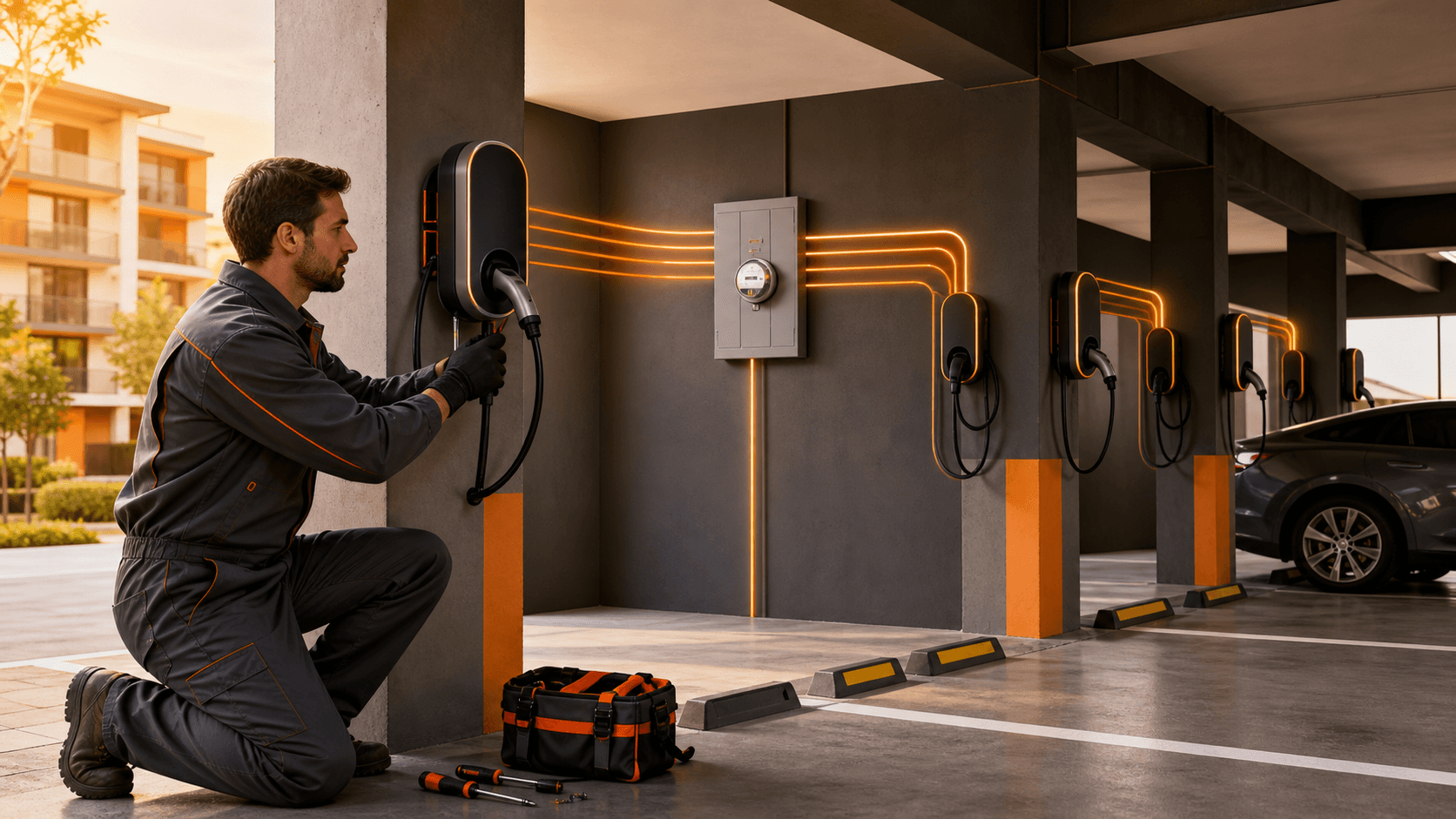
An electrical contractor will look at your main service size, existing panels, and typical loads to see what spare capacity you have. From there, they can recommend:
- Basic load sharing on small projects
- Central load management for larger ones
- When a service upgrade is needed
Planning metering and load management together at the start usually gives you the most flexible and scalable setup.
Planning Your Strata EV Charging Project
Most successful projects follow a similar path:
- Council agrees to explore EV charging
- An electrical contractor completes a site visit, load review, and budget range
- Council and management check current rebates and grants
- Draft or update bylaws, rules, and user agreements with legal input
- Hold an owner information session and vote where needed
- Final design, permit applications, and TSBC inspections (work is permitted and TSBC-inspected)
- Commissioning, owner onboarding, and regular policy reviews
Season and budget cycle both matter. Many stratas use late summer and fall to handle design, bylaw drafting, and owner meetings so actual work fits better with dry weather or the next fiscal year. The biggest roadblocks we see are aging electrical gear, tight rooms, nervous councils, and owners pushing for one-off solutions before a shared plan exists. A clear, building-wide plan usually calms all of that.
FAQ: Strata EV Charging in the Lower Mainland
How Much Electrical Capacity Does Our Strata Need for EV Charging?
Most buildings do not need enough power for every stall to charge at full speed at the same time. An electrician looks at your main service, existing loads, and typical use, then sets safe limits and uses load management so power is shared without overloading equipment.
Who Pays for EV Chargers in a Condo Building?
Common approaches are full user-pay, or a mix where the strata funds base infrastructure and EV owners pay usage and maintenance through fees. Whatever you choose should be set out in your bylaws and individual user agreements so expectations are clear.
Can Our Strata Refuse an Owner's Request for an EV Charger?
Stratas are generally expected to act reasonably under BC law. Requests may be modified or delayed for safety, lack of capacity, or unfair costs to the rest of the owners, but councils should get legal guidance on specific situations and document decisions carefully.
Do We Need Individual Metres for Every EV Stall?
Not always. Many stratas use networked chargers or sub-metering to track usage by user instead of physical metres at every stall. An electrical contractor can suggest an option that balances accuracy, cost, and ease of billing for your type of building.
How Long Does a Typical Strata EV Charging Project Take?
It usually takes several months from first assessment to a finished system, because of design, council decisions, owner votes, and electrical work. Once a site visit and information review are done, an electrical contractor can normally provide a quote and a plan within one business day so you can make informed decisions.
To plan strata EV charging that is fair, legal, and sustainable for your building, call Sunset Electric at (778) 951-0607 or request a free quote at our website today.
Get Started With Your Project Today
If you are ready to make home or workplace charging easier and more reliable, we are here to help you plan and install the right solution. As your local EV charger installer in the Lower Mainland, we focus on safe, code-compliant work that fits your daily routine and long-term needs. Reach out to Sunset Electric LTD and we will walk you through options, permits, and timelines so there are no surprises. Have questions or want to book a site visit? Simply contact us to get started.