Flickering lights can be as simple as a loose bulb or a temporary BC Hydro outage. But repeated, widespread, or worsening flickering should be checked by a flickering lights electrician in Vancouver.
Winter problems often stand out more during long, dark evenings, especially when storms, indoor heating, and heavier building use put added demand on electrical systems. With more than 20 years of experience, we serve Metro Vancouver clients as a TSBC-licensed contractor, LIC-0003001, with $5M insurance, a BBB A rating, BC Hydro Power Smart membership, and a 5.0 Google rating.
Why Winter Makes Flickering More Noticeable
Cold weather can reveal electrical weaknesses that were easy to miss during lighter-use months. Portable heaters, electric baseboards, kitchen appliances, office equipment, and extra lighting can all run at the same time.
Older Vancouver homes, strata buildings, and commercial spaces may have wiring or panels that were not built for today's electrical loads. A circuit that seemed fine in summer may be affected when heating equipment and appliances are working harder.
If nearby properties are experiencing the same issue, check BC Hydro outage information first. When flickering is limited to one suite, unit, business, or group of circuits, we recommend having the building's electrical system assessed.
Common Causes of Flickering Lights
Loose connections are a common cause. A problem may be inside a fixture, switch, outlet, junction box, or electrical panel. These components should be inspected by a qualified electrician rather than adjusted without the appropriate qualifications.
Shared circuits can also cause lights to dim or flicker when equipment starts. We often see this when a microwave, kettle, space heater, elevator, HVAC equipment, or large appliance shares a circuit with lighting.
Aging panels and service equipment can play a role as well. Worn breakers, corrosion, or limited panel capacity may lead to inconsistent power. If you are searching for a flickering lights electrician Vancouver property owners can rely on, the goal is not to guess at the cause, but to find where the issue begins.
Checks Before an Electrical Assessment
You can make a few observations before arranging service. Note whether the flickering is limited to one lamp or fixture, and whether a known working bulb changes the pattern.
Make note of what you see:
- Does the flickering affect one light, one room, or several areas?
- Does it start when a specific appliance or piece of equipment runs?
- Are other homes, units, or businesses nearby experiencing power issues?
- Have breakers tripped, or have lights dimmed sharply?
An electrician can review panel components and wiring where required. Electrical work may be permitted and TSBC-inspected, depending on the work involved.
For strata and commercial properties, clear notes help us narrow down the issue. Record affected areas, equipment in use, the time of day, and reports from tenants or staff.
Details That Help with an Assessment
Some flickering patterns provide useful information during an assessment. Lights flickering throughout a property, dimming when equipment starts, or flickering with partial power loss can help identify whether the issue is isolated or related to a broader electrical system.
Record details such as:
- Breakers or circuits involved
- Sounds from the panel or equipment
- The rooms, units, or areas affected
- Equipment operating when the flickering begins
- Changes in the frequency or timing of the issue
This information helps distinguish between a fixture-specific issue, a circuit concern, and a building-wide power pattern. For properties with ongoing maintenance needs, keeping a clear record also supports planning for permitted and TSBC-inspected electrical work.
How We Find the Cause
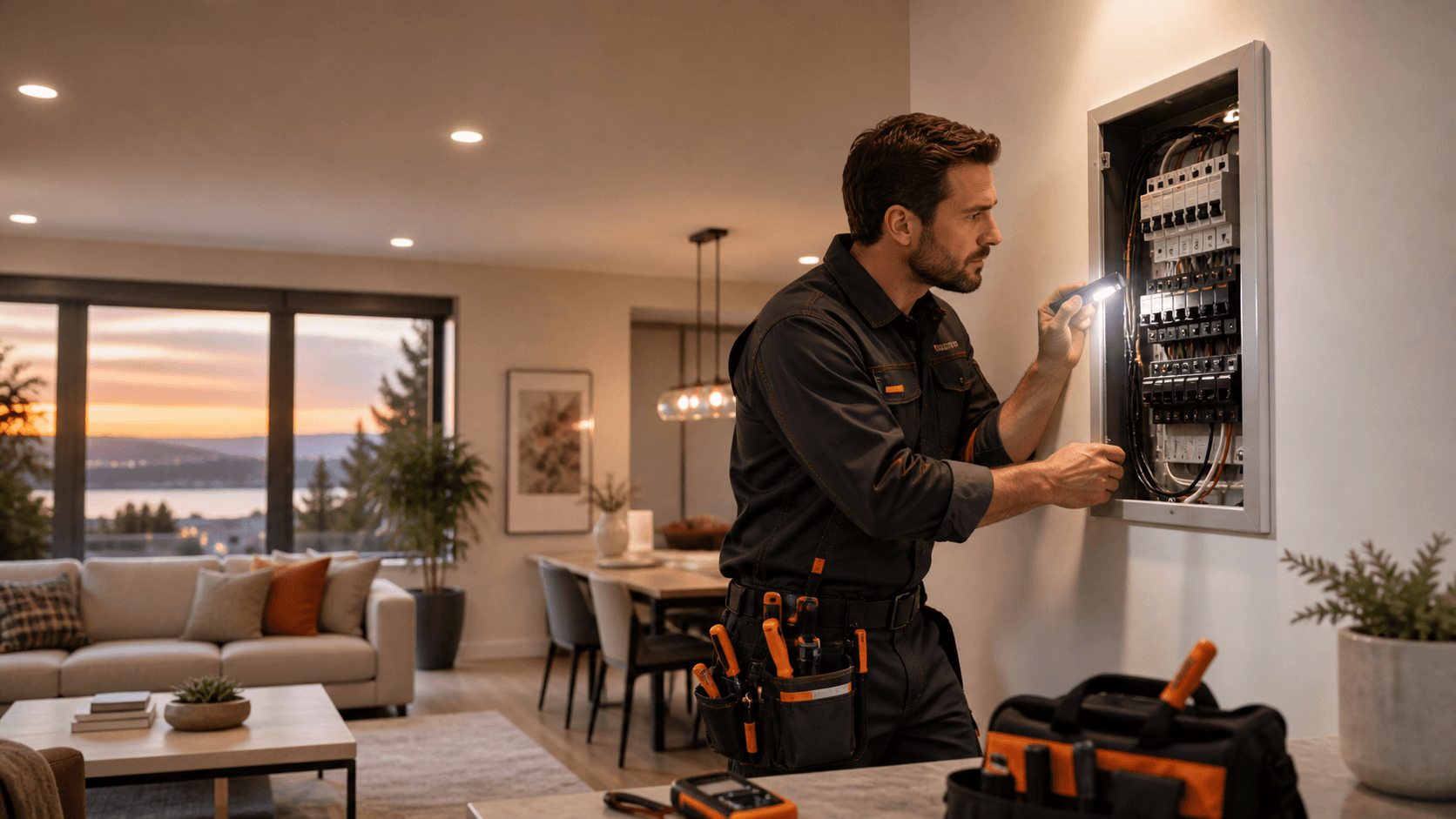
An electrical assessment starts with the pattern of the problem. We identify which circuits are affected, inspect fixtures and connections, test for voltage irregularities, and review breaker and panel condition. This helps us determine whether the issue is isolated or system-wide.
The fix may be straightforward, such as repairing a fixture, switch, or connection. Other situations may call for circuit repair, load balancing, a dedicated circuit, or planning a panel upgrade where capacity is limited. We explain the available options before work begins, without assuming a repair price before an on-site assessment.
Clear Answers for Flickering Light Concerns
Sunset Electric LTD brings over 20 years of licensed electrical experience to homes and businesses. For a flickering lights electrician in Vancouver, our team can assess the concern and explain the next steps clearly. Contact us for a free quote within one business day.
Frequently Asked Questions
Why Do My Lights Flicker When I Turn On An Appliance?
A large appliance can draw significant power when it starts. An assessment can determine whether the lighting and appliance are on a shared circuit or whether another part of the electrical system is involved.
Can A Loose Light Bulb Cause Flickering?
Yes. A loose or failing bulb can cause one fixture to flicker. If a properly seated, working replacement bulb does not solve the issue, the fixture, switch, or wiring may need inspection.
Can Flickering Lights Indicate An Electrical Issue?
Flickering can be related to a bulb, fixture, switch, circuit, panel, or utility power issue. An electrician can assess the pattern and identify the source.
Should I Call BC Hydro Or An Electrician For Flickering Lights?
Check BC Hydro outage information if the issue affects the whole neighbourhood or building. If it is limited to your home, unit, business, or certain circuits, an electrician can identify the building-specific cause.
When Should I Call A Flickering Lights Electrician In Vancouver?
Arrange an assessment when flickering keeps returning, affects multiple lights, happens when appliances start, or occurs alongside breaker trips, panel sounds, or partial power loss. These details can help identify where the issue begins.