If you see smoke, smell burning, feel heat, or get a shock, shut things down if you can do so safely, and call a 24-hour emergency electrician in Vancouver right away. If you are dealing with flickering lights, occasional breaker trips, or loose outlets without heat or burning smells, it is usually safe to book a same-week visit instead of an overnight emergency call.
As a TSBC-licensed contractor (LIC-0003001), insured for $5M, BBB A-rated, BC Hydro Power Smart member, and serving the Lower Mainland for over 20 years, we spend a lot of time helping people sort this out over the phone. With a strong 5.0 Google rating, we focus on clear, no-pressure advice so you can decide whether you need emergency help or a regular appointment.
Knowing What Counts as an Electrical Emergency
An electrical emergency is any situation where there is an immediate risk of fire, shock, or major property damage. In homes, strata properties, and businesses, this is when you stop what you are doing, turn power off if you can do it safely, and get 24-hour emergency help.
Non-emergency issues are still important, just not "right this second" urgent. These are the warning signs that tell you something is wrong, but the situation is stable enough to wait for a same-week visit.
If you are not sure which category you are in, a quick phone call to a TSBC-licensed contractor with a strong track record and 5.0 Google rating can usually sort it out. You should be able to describe what you see, hear, or smell and get clear, no-pressure advice on next steps.
Clear Signs You Need an Emergency Electrician Now
Stop using power and consider it an emergency if you notice:
- Burning or hot plastic smells from panels, outlets, or switches
- Visible arcing or sparking when you plug in or turn something on
- Smoke from an appliance, light fixture, or electrical panel
- Breakers, fuses, or the panel cover that are hot to the touch or look like they are melting
- A shock or tingle when you touch an appliance, tap, or metal surface
- Sudden loss of power in part or all of the building that is not due to a BC Hydro outage
In summer, we see more problems when:
- Portable AC units or fans are plugged into old outlets or power bars
- High-load devices are run on cheap extension cords
- Older panels are pushed close to their limits for long hours
Flooded basements, wet panels, or downed power lines near your property are also emergencies. Power lines on the street or in the lane are a BC Hydro issue, and you should keep well back and call them and 911 if there is fire or injury.
When an emergency electrician arrives, they will usually:
- Make the area safe, often by shutting off certain circuits
- Inspect and test to find the fault
- Do urgent repairs or safe temporary workarounds
- Explain what longer-term repairs or upgrades should happen later
Non-Emergency Warning Signs for Same-Week Service
Some problems do not need a 2 a.m. visit, but they should not be ignored for months. Book a same-week electrician if you notice:
- Breakers that trip often, even if they reset
- Lights dimming when the fridge, AC, or microwave starts
- Outlets or switches that feel warm or look brown or discoloured
- Occasional buzzing from the panel or a single breaker
- A faint plastic or "hot" smell that comes and goes
Other common "next few days" issues:
- Outlets where plugs fall out or feel loose
- Older two-prong receptacles that spark when used
- Flickering LED pot lights that are not fixed by changing the bulb
- GFCI outlets in kitchens, bathrooms, or outdoors that trip often
Ignoring these signs can lead to more nuisance tripping, damage to electronics, or, in the worst case, a future fire risk if heat builds over time. Having a TSBC-licensed electrician check things within days is usually far easier than dealing with a middle-of-the-night breakdown.
Seasonal Red Flags and Who to Call
In Vancouver and the Lower Mainland, summer brings some patterns in homes and rentals. Watch for:
- Several power bars on one circuit feeding AC units, TVs, and computers
- Extension cords under carpets or through doorways, which can overheat or get damaged
- Laundry circuits that trip when multiple machines run at once
- Flickering hallway or stair lighting and buzzing exit signs
- Breakers that trip in parking areas where EV chargers or heat pumps have been added
Many older houses still have smaller services, mixed aluminium and copper wiring, or original panels from past decades. Rust, corrosion, or breakers that feel loose are usually a "plan a panel assessment this week" issue. But if these signs suddenly come with strong smells, smoke, or breakers that trip again the moment you reset them, treat it as an emergency.
When deciding who to call, a simple path helps:
- Call 911 if there is fire, heavy smoke, big sparks near anything that can burn, or someone hurt by electricity
- Call BC Hydro for lines down, a damaged meter outside, or a clear neighbourhood-wide outage
- Call a licensed electrical contractor for problems inside your home or building that are not related to the supply on the street
A handy rule of thumb: anything with fire, shock, or live wires you cannot safely turn off is an emergency. Anything that seems odd but stable, with no smoke, no heat, and power mostly working, is usually fine for a same-week visit.
What to Expect From a Same-Week Visit and Simple Safety Checks
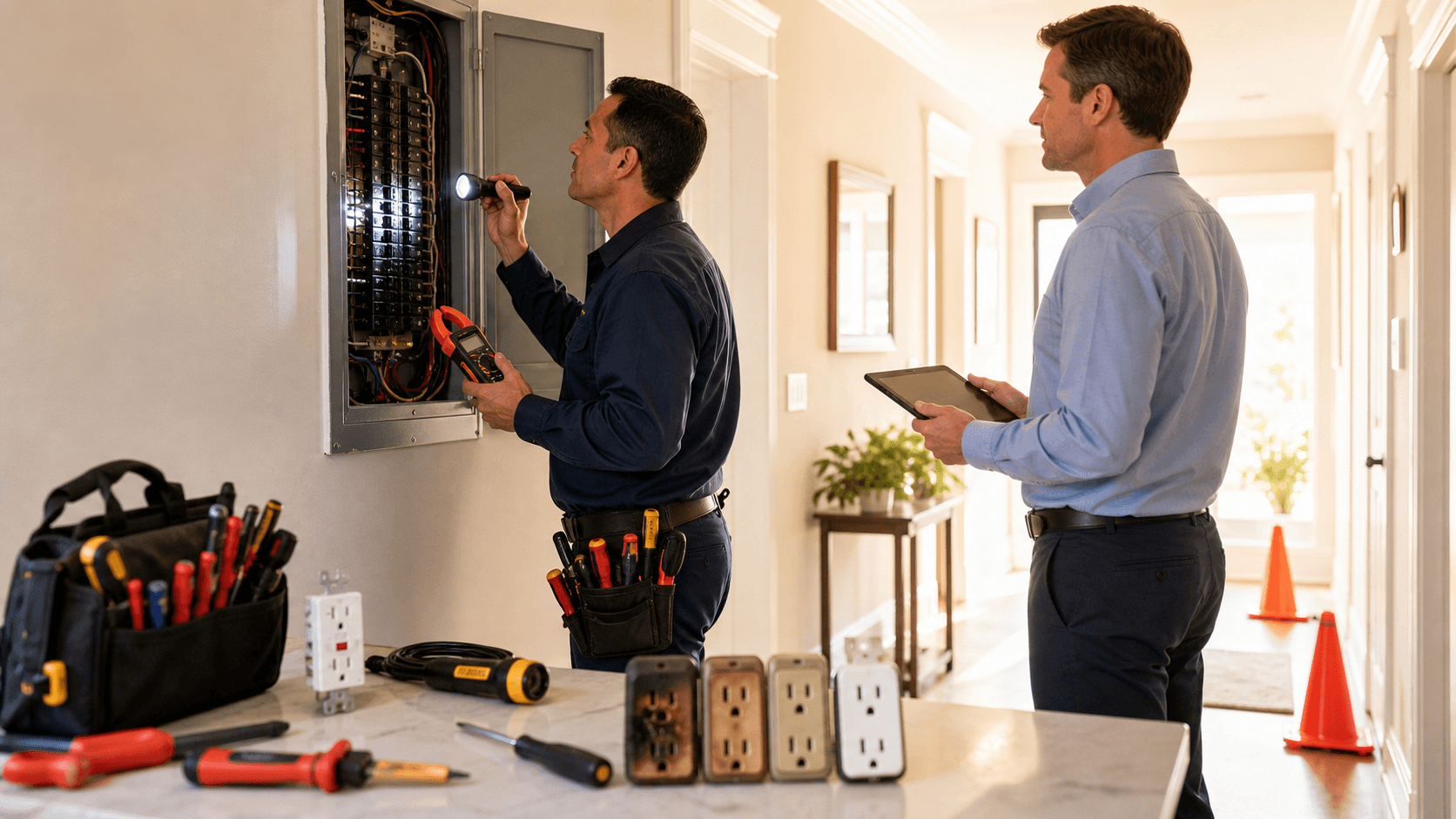
On a typical non-emergency service call, the electrician will:
- Talk with you about what you have seen, heard, or smelled
- Do a safety check of the main panel and key circuits
- Test outlets, switches, and affected equipment
- Explain findings in plain language and suggest next steps
Common fixes include tightening or replacing loose connections, swapping damaged outlets or switches, balancing loads across circuits, and recommending panel upgrades or new dedicated circuits for items like EV chargers or AC units, where needed. Work that needs permits is done under TSBC rules and inspected as required.
While you wait for your appointment, there are a few safe things you can do without tools and without opening any panels:
- Turn off and unplug any device linked to the issue
- Gently feel outlets and power bars with your hand to check for warmth
- Test smoke alarms and CO detectors using their built-in buttons
- Clear space around the panel and problem areas so the electrician can get right to work
- Note when the issue happens, like "only when the dryer and portable AC are both on"
Do not remove panel covers, do not tape breakers in the ON position, and do not keep resetting a breaker that trips over and over. If a breaker keeps tripping, switch it to OFF and wait for a professional.
FAQ
Should You Call an Emergency Electrician in Vancouver or Wait?
If you see or smell smoke, feel heat, notice a strong burning smell, or experience a shock, treat it as an emergency. If you are dealing with flickering lights, occasional breaker trips, or loose outlets without heat or burning smells, that is usually fine for a same-week booking.
Can I Keep Using Power If a Breaker Tripped Once and Then Reset?
If it trips once, resets properly, and does not trip again right away, it is often safe short term. If the same breaker trips repeatedly, stop using that circuit, switch it off, and arrange for an electrician to inspect it.
Who Do I Call if a Power Line Is Down on My Vancouver Street?
Downed or low power lines are handled by BC Hydro, and they can be very dangerous. Stay far away, keep others back, and call BC Hydro's emergency number and 911 if there is fire or injury.
Is It Safe to Use Extension Cords Long Term for AC or Heaters?
High-load devices like AC units and space heaters should not run on extension cords long term. They should be on properly sized, permanent wiring and, in many cases, their own dedicated circuit to keep things safe and reliable.
Will a Non-Emergency Service Call Include a Full Home Electrical Inspection?
A regular visit usually focuses on the issues you reported. If you want a full home or building inspection, you can ask the electrician, and they can explain what that includes and plan a separate visit if needed.
If you are unsure whether your situation is an emergency or a same-week issue, call us at (778) 951-0607 or request your free quote online today. We can usually provide a quote within one business day and offer 24-hour emergency service when you need it.
Get Started With Your Project Today
If you are facing an urgent electrical problem or planning proactive upgrades, we are ready to help keep your home or business safe and reliable. At Sunset Electric LTD, our licensed team is available when you need an emergency electrician in Vancouver who can respond quickly and do the job right. Reach out today using our contact page form so we can assess your situation and schedule prompt service.