Is Your Electrical Service Holding Your Home Back?
If your home still has 100 amps of service, there is a good chance it is starting to feel tight for how you live now. More appliances, more electronics, plus EVs and heat pumps can quickly push an older service to its limits across the Lower Mainland and up the Sea to Sky.
This article is primarily for single-family homeowners and small strata units planning renovations, suites, EV chargers, or a move toward more electric heating. For larger strata and small commercial spaces, see the sections noted below.
When work is tied into BC Hydro, safety is not optional. A TSBC-licensed contractor (LIC-0003001), with the proper permits and TSBC inspections, helps keep your home safe, keeps the work legal, and keeps your insurance onside. Choosing a contractor who is BC Hydro Power Smart-aligned, carries $5M liability insurance, is BBB A-rated, and has 20+ years of local experience with a strong Google rating builds in an extra layer of trust.
Everyday Warning Signs Your Panel Is Undersized
Most homes give you little clues long before a major electrical problem shows up. Some of the most common include:
- Breakers that trip when you run a kettle and toaster together
- Lights that dim when the dryer, oven, or vacuum starts
- Rooms that rely on power bars and extension cords just to feel usable
Frequent breaker trips are a big flag. If you keep resetting the same breaker every time someone plugs in a space heater or hairdryer, that circuit is likely loaded near its limit, or the overall service is undersized for the house.
Flickering or dimming lights when large loads turn on are another warning, especially in older homes in East Van, on the North Shore, or in older cabins up the Sea to Sky. That dip in brightness is your electrical system struggling to keep up.
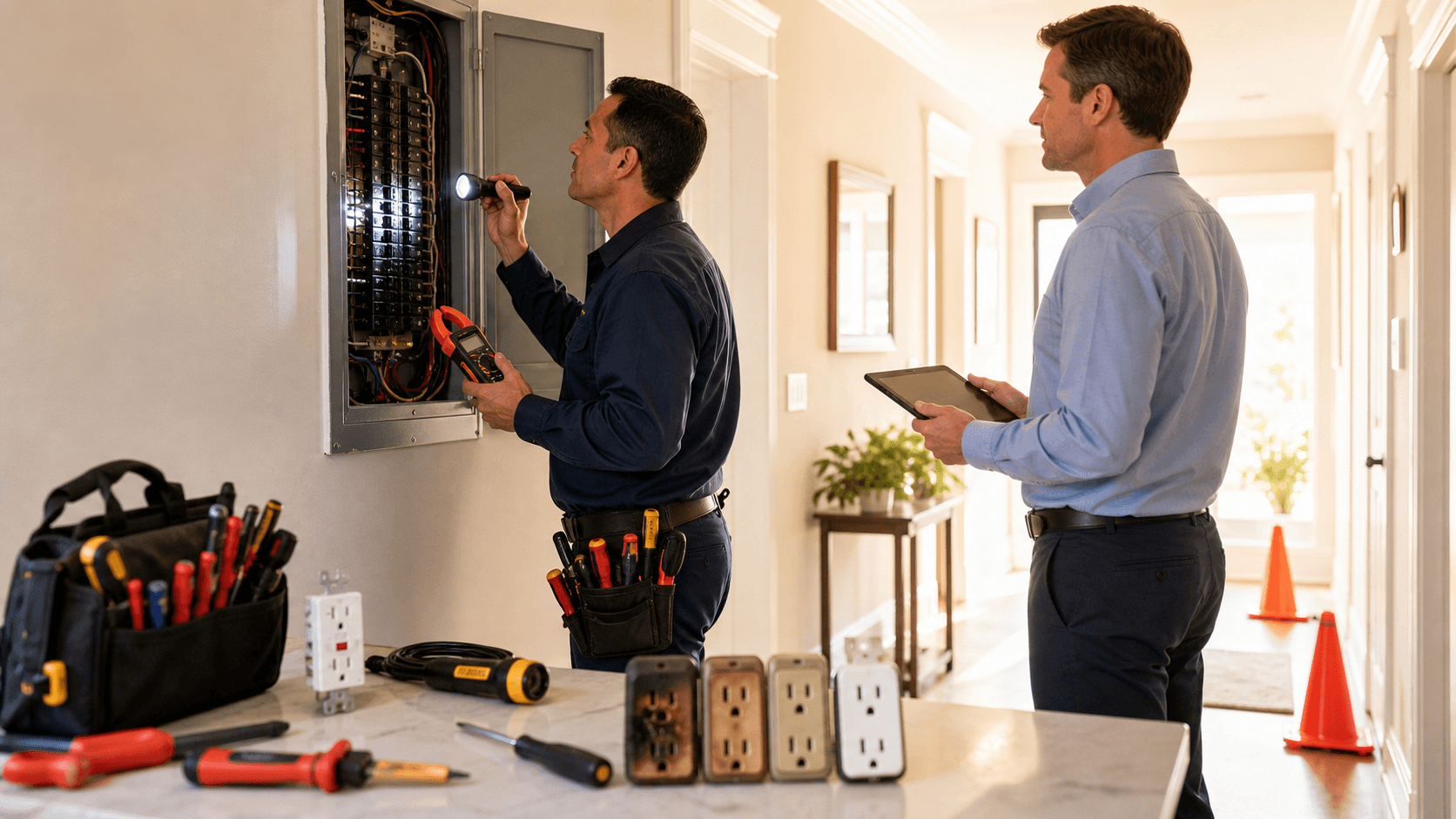
Warm panel covers or strange sounds and smells are more serious. Watch for:
- Panel door or breakers that feel warm or hot
- Buzzing, crackling, or sizzling sounds from the panel area
- A faint burning or melting plastic smell near the panel
Those signs call for a licensed electrician right away, not DIY. Heat and arcing around your panel can lead to damage and fire risk if ignored.
Many homes also show their age through overuse of power bars and extension cords. If you have:
- Multiple power bars behind TVs and desks
- Extension cords running under rugs or across rooms
- Ten things plugged into one old outlet box
you may have both circuit layout issues and overall capacity limits. A 200-amp service with a modern panel can support more dedicated circuits so you are not stacking everything onto a few old ones.
Big Life Changes That Push 100 Amp Service Too Far
Even if your panel is not acting up yet, new loads can tip it over the edge.
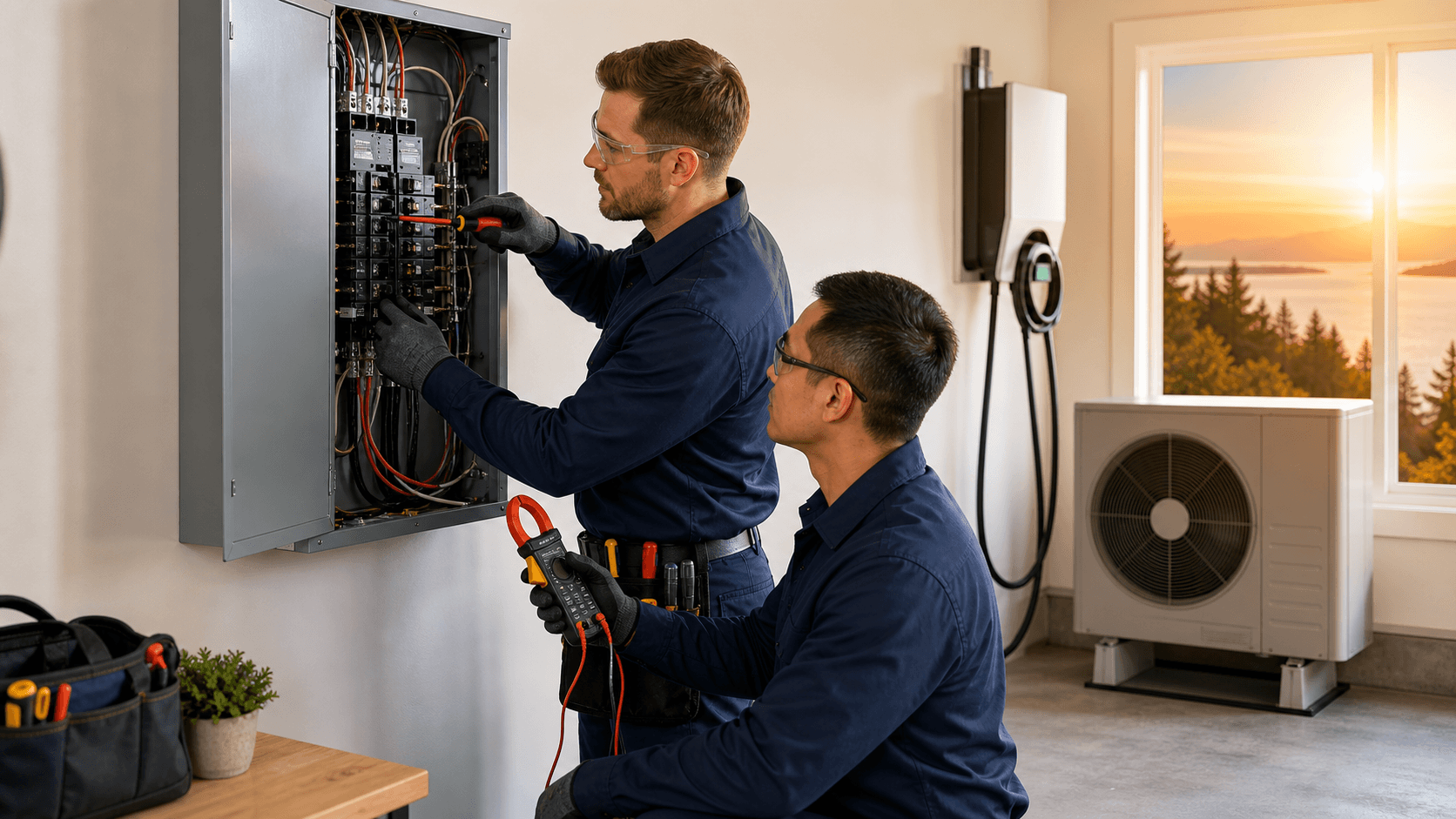
Adding EV chargers and heat pumps is a big one. A typical Level 2 EV charger plus a heat pump can be a heavy draw, especially in a house that already has:
- Electric baseboard heaters
- An electric hot tub
- Older electric appliances
Most modern EV chargers and whole-home heat pumps are designed with 200-amp services in mind. On a 100-amp service, you often run out of room on paper, even before you plug in the car.
Renovations also push services harder. Finished basements, secondary suites, and backyard laneway homes add:
- New kitchens with stoves and microwaves
- Separate laundry sets
- Extra heating and bathroom fans
Once you add those loads, many homes in Burnaby, New Westminster, the Tri-Cities, and surrounding areas need a 100- to 200-amp upgrade to stay within safe capacity and pass an inspection.
There is also a strong shift from gas to electric for ranges, dryers, and water heaters. This electrification trend increases your electrical load every time a gas appliance is removed. Older 60- to 100-amp services in post-war housing stock often cannot support a fully electric lifestyle without an upgrade.
How a 100 to 200 Amp Upgrade Works in BC
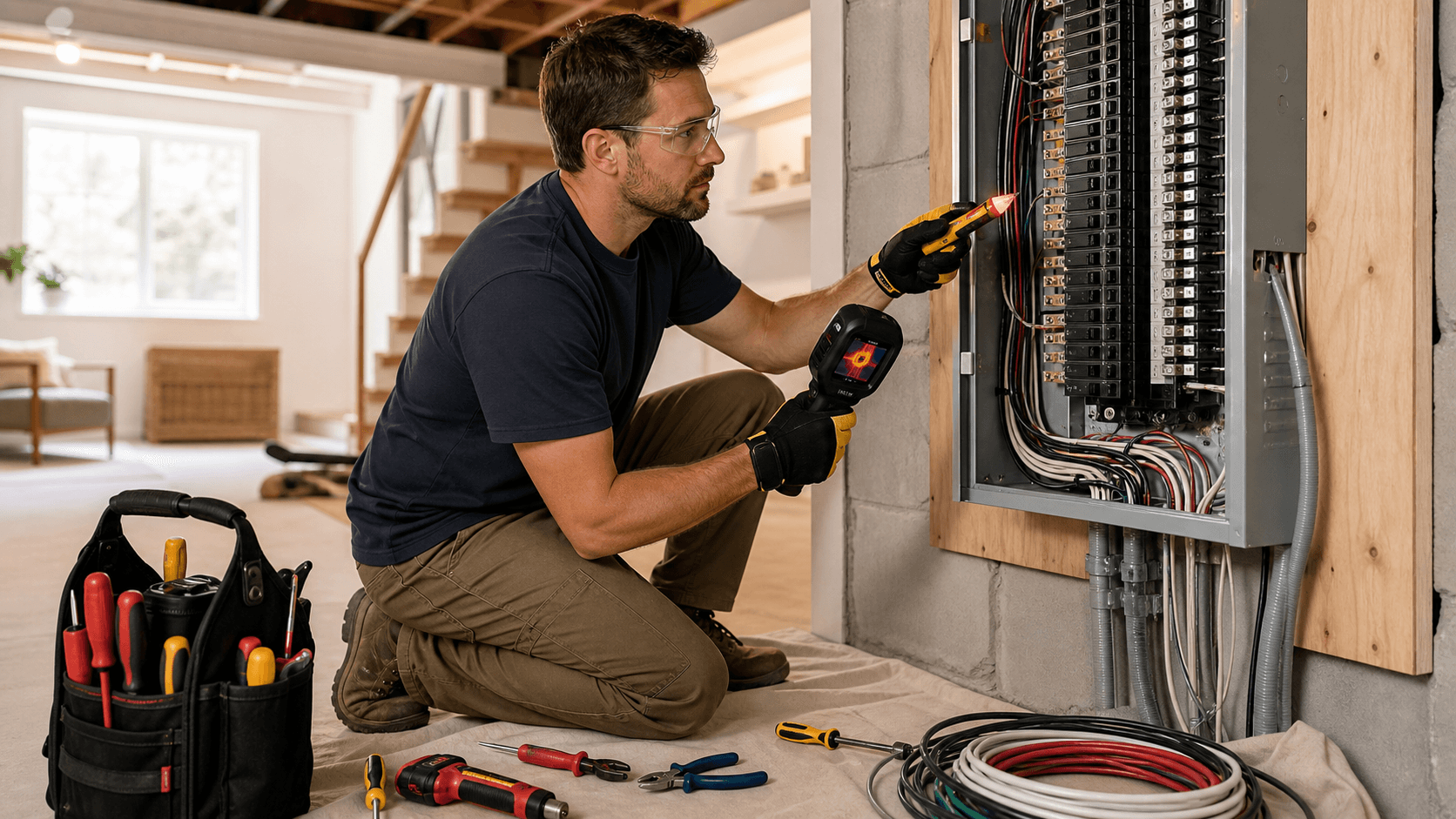
A 100- to 200-amp upgrade in a Lower Mainland home is more than squeezing in a few extra breakers. In simple terms, it usually includes:
- Upgrading the service mast or underground feed
- Installing a new meter base sized for 200 amps
- Replacing the main panel with a 200-amp model
- Updating grounding and bonding to current code
The goal is not just more outlets. It is to create safe capacity for present and future loads, with room for EVs, heat pumps, and renovation circuits.
In BC, this work is permitted and TSBC-inspected. A licensed contractor handles:
- Pulling the correct permits
- Coordinating BC Hydro for power disconnect and reconnect
- Arranging inspections through Technical Safety BC
A typical process looks like this:
- Site visit and load assessment
- Written quote and scope
- Permit application and scheduling
- Panel changeover, usually in one working day, with power off for several hours
- Inspection and BC Hydro reconnection
Many homeowners prefer to book upgrades in summer when outages are easier to live with and before heavier fall and winter heating loads kick in.
Costs, Options and Long Term Value
Every home is different, and final costs depend on things like service location, distance to the property line, wall finishes, and municipal fees. Also, each city or district in the Lower Mainland and Sea to Sky sets its own permit and inspection charges, and those can change over time.
There are also programs that sometimes help with panel upgrades when they are tied to EV chargers or heat pumps. As of 2024, these may come through BC Hydro or provincial energy programs. The rules change regularly, and final eligibility is decided by the program, not by the contractor, so it is worth checking current details before planning your project.
The long-term value of a 200-amp service goes beyond capacity. Homeowners usually see:
- Fewer nuisance trips and less frustration
- Cooler running circuits and panels
- Better support for sensitive electronics and home office gear
- Clear documentation and modern equipment that buyers and insurers tend to appreciate
In busy neighborhoods where buyers compare homes closely, a newer 200-amp panel can be one more box ticked on their list.
When a Full Upgrade Is Not the Only Option
A proper load calculation is often the first step before anyone suggests a 100- to 200-amp upgrade in your home. Sometimes the issue is not total capacity, but how loads are spread across circuits.
In some cases, smart devices can help, such as:
- Load misers that shed loads when others turn on
- Smart EV chargers that limit current based on real-time use
These can delay a full service upgrade if used correctly and in line with code.
Subpanels and targeted circuit work are another option. For example:
- Adding a small subpanel closer to a renovation area
- Splitting overloaded general lighting circuits
- Cleaning up mixed-use circuits in suites or townhomes
That said, if the main service is already at its limit, a subpanel is just a branch off an already full tree. In those cases, a full 200-amp upgrade is often the most practical recommendation.
For Strata Buildings and Small Commercial Spaces
For strata buildings and small commercial spaces in places like Surrey, Richmond, or Squamish, the picture changes again. Common rooms, parkade EV infrastructure, and shared HVAC systems often need a building-level load study and long-term planning instead of a simple panel swap in one unit.
A TSBC-licensed electrical contractor with strata and small-business commercial experience can help strata councils and property managers plan staged upgrades, coordinate with BC Hydro, and work within building bylaws.
FAQs About 100 to 200 Amp Upgrades in Metro Vancouver
How do I know if I have 60, 100 or 200 amp service now?
Most panels have the main breaker size marked on the large switch at the top, such as 60, 100, or 200 amps. Labels can be worn or confusing, so a site visit from a licensed electrician gives the most reliable answer.
Do I always need 200 amps for an EV charger?
Not always. Some homes can support a Level 2 charger on 100 amps with proper load management and a clean panel. If you are adding EVs plus other electric upgrades, 200 amps is often strongly recommended.
Will a 200 amp panel lower my hydro bill?
No. The panel size does not reduce usage on its own. It simply gives you the capacity to run more efficient gear, like heat pumps or modern appliances, which can help your overall energy use.
How long will my power be off during the upgrade?
On a typical single-family upgrade, the main outage is usually limited to part of a single day while the panel and service are changed. Exact timing depends on BC Hydro scheduling and inspection needs.
Can I stay in the house while the work is done?
Yes, most people stay home. You will be without power for several hours, so plan for no lights, no Wi‑Fi, and no cooking on electric appliances during that window.
Is 200 amps enough to future-proof my home?
For most single-family homes, 200 amps is plenty, even with one or two EVs and a heat pump. Very large homes or those planning multiple EVs, hot tubs, and full electrification may need a bigger discussion about larger services.
Get Started With Your Project Today
If you are considering a safer, more reliable electrical system, we can help you plan and complete your 100 to 200 amp upgrade in Vancouver with minimal disruption to your home or business. At Sunset Electric LTD, we assess your existing service, explain your options in clear terms, and coordinate all necessary permits and inspections. Reach out to contact us and schedule a consultation so we can get your upgrade underway with the right solution for your space.